Real-life tools to calm your reactions and reclaim your peace
🌋 Intro: Confessions of a Reactor
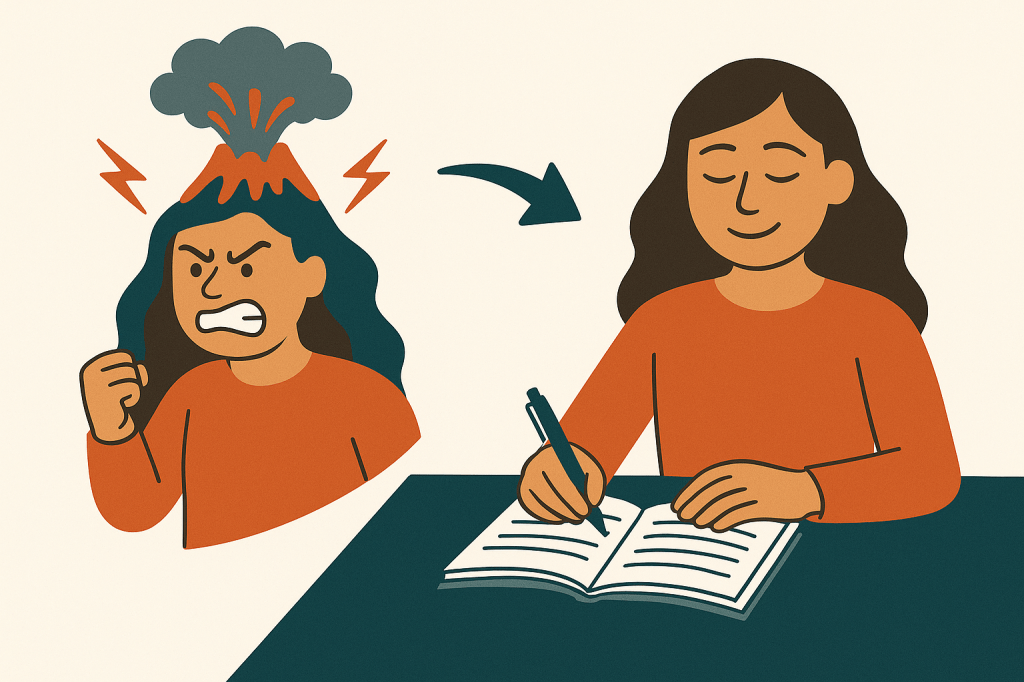
I’ve always been known as a reactor.
A nuclear reactor.
Until recently, I had no idea how to stop myself from exploding at every little disruption in my life. If I didn’t like something—it had to go! And if you don’t believe me, just ask my husband. 😅
I still blow up now and then—because let’s face it: change doesn’t happen overnight. But I’m learning. Slowly but surely, I’m figuring out how to self-regulate my emotions so I don’t react from fear or anger. Instead, I’m working on responding with clarity, calm, and intention.
If that sounds like something you need too, stick with me. Here are a few powerful self-regulation strategies that you can start practicing right away.
🧘♀️ 1. The Power of the Pause
“Respond as yourself, not your emotion.”
A simple pause can go a long way.
When you feel yourself getting worked up, pause before you boil over. Take a breath. Step away. Just one moment of stillness can completely shift the direction of a conversation—or your entire day.
Instead of reacting from anger or stress, you give yourself the space to choose how you want to respond.
🔄 2. Reframe the Situation
When something goes wrong, it’s easy to focus on the negative. But instead of asking, “Why does this always happen to me?”—try asking,
“What can I learn from this?”
That simple reframe is a game changer.
You’re not denying that it’s hard—you’re just choosing to see it differently. Over time, this shift helps train your mind to look for growth, opportunity, and silver linings instead of spiraling into negativity.
💬 “Reframing doesn’t erase the pain. It simply invites possibility into the picture.”
🚨 3. Identify Your Triggers
We all have them—those little things that push our buttons. But do you know why?
When you take time to explore your emotional triggers, you often uncover deeper layers: past experiences, unmet needs, or unresolved pain. And once you’re aware of those roots, you can begin to heal.
Self-awareness is the beginning of self-control.
💬 4. Observe Your Feelings (Out Loud)
It might feel silly, but try this:
Say out loud what you’re feeling.
“I’m feeling overwhelmed.”
“I’m feeling unheard.”
“I’m feeling scared.”
Naming your emotions creates separation. It reminds you that while you have feelings, you are not defined by them. You gain clarity. You reclaim your calm.
📝 5. Use Journaling to Clear the Clutter
My mind races all the time. When something’s bothering me, I can’t sleep, I can’t focus—it takes over. That’s why journaling has become my emotional lifesaver.
I write it all out—the good, the bad, the irrational, the raw. Then I re-read it. I look for what’s really bothering me. I challenge my assumptions. I try to find even one thing positive.
✍️ “Journaling helps you step outside the chaos and look at it with fresh eyes.”
And the best part? Once it’s out of my head and on the page, I can breathe again.
🎯 Final Thoughts: Progress, Not Perfection
There’s no one-size-fits-all approach to self-regulation. Try each of these techniques and see what sticks. Some will work better in certain situations than others—and that’s okay.
The important thing is having a toolkit to lean on when emotions start to run the show.
💡 Remember: You are in charge—not your emotions.
Self-regulation isn’t about always getting it right. It’s about building awareness, practicing small shifts, and giving yourself grace when it gets messy. Celebrate your wins. Reflect when things don’t go well. And above all, keep going.
You’re growing—and that’s something to be proud of.
 Miss Fortune Blog
Leave a comment